

AI in Education is Not a Foregone Conclusion. Stop Acting Like it Is.
Passionate testimony by Dr. Kelly Clancy, founder of the Parents for AI Caution in Educational Spaces (PACES), advocating for a moratorium on AI in New York City Public School

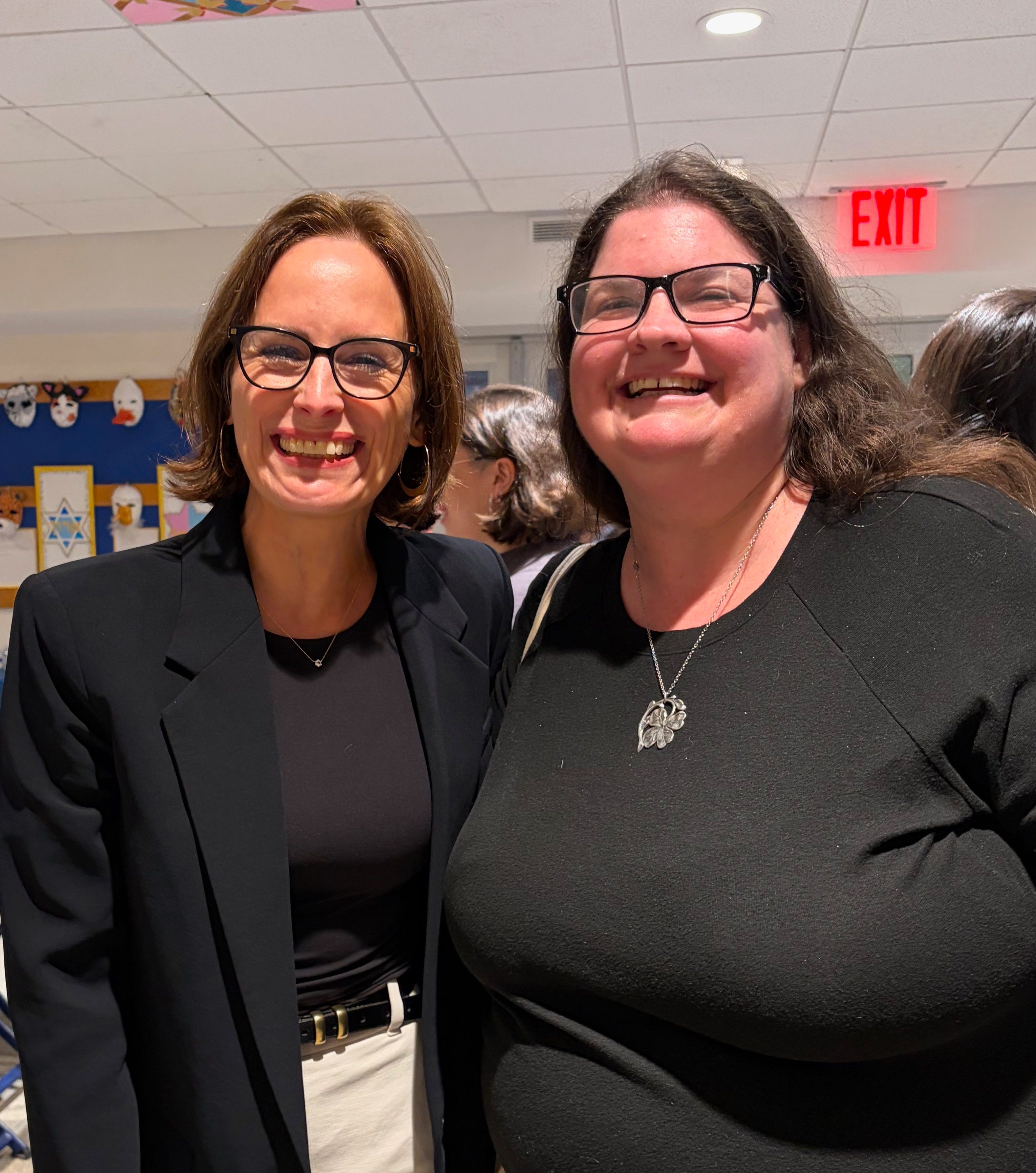
Note from Emily: One of the best parts about the work I do is getting to meet people like Kelly Clancy, who is an absolute force in resisting the AI onslaught in NYC public schools. (New Yorkers, if you don’t know her, you should, and when you meet her, you should tell her thank you. I got to meet her in person in May and I’m so glad I did.) I met Kelly when she joined our volunteer team at Fairplay in writing and calling for a 5-Year Pause on GenAI in PreK-12 Schools. Kelly exemplifies the reasoned, sane, wise, level-headed approach we would hope lawmakers and education leaders would take when it comes to deploying AI products into classrooms, but of course, that’s not how things are and so we’re just very lucky that people like Kelly exist.
Kelly’s work with PACES is an excellent entry point for those seeking resources to just, at least, at the bare minimum, get schools to actually think about the impact of dumping AI products onto children and calling it “educational.” Last week, New York City Council held a four-hour meeting to grill the Department of Education on AI in NYC Public Schools. Kelly provided written testimony to her City Council and gave me permission to share it with you here. I’ve taken the liberty to highlight a few of my favorite lines for your reading pleasure. Please use the numerous resources embedded within this document to support your own efforts, and thank you for remembering that AI is not a foregone conclusion, and that we all still have voice and agency in our efforts.
June 24, 2026
Dear City Council Members,
My name is Dr. Kelly Clancy, and I am a member of the District 20 CEC. I am also the founder of Parents for AI Caution in Educational Spaces (PACES), which is part of the AIM Coalition advocating for a moratorium on AI in NYCPS. I also hold a PhD in political science.
First, I would like to thank the members of City Council for overwhelmingly supporting a moratorium on AI in NYC schools. I was so proud of and thankful for the leadership you’ve shown on the issue.
I am now writing to formally ask the City Council to exercise all its power to rein in the DOE on ed tech in general, and AI in particular. Although I am a member of AIM and CEC D20, I am writing in my personal capacity.
The chancellor invited the AIM Coalition to meet with him on May 21 and again yesterday, on June 23. After those meetings, I am convinced that the chancellor does not have the vision or the willpower to lead NYCPS through the difficult terrain of protecting our children from the pernicious effects of AI in the classroom. This morning, the New York Post wrote: “The Department of Education defended its approach, saying student access to AI tools is tightly controlled.” This statement shows that the DOE is woefully out of sync with the thousands of parents and teachers who have testified this year about the rampant spread of AI in classrooms across the city.
Here is the executive summary:
The impact of AI on children’s and adolescents’ brain development has reached what neuroscientists are calling “population-level evidence of cognitive foreclosure.” Yesterday the chancellor admitted that there is no evidence (outside the ed-tech industry’s marketing) to support the claim that AI has a positive impact on learning. But he is moving forward with AI anyway. Making a decision like that for 800,000 kids, despite a bevy of research against it, is policy malpractice.
The overwhelming will of the NYC community supports a moratorium on AI. Here are the facts: Thousands of parents and teachers have spoken out against AI at CECs, PEPs, and other community meetings. Over 500 artists signed a letter supporting a moratorium on AI. More than half of you, the members of the City Council, signed a letter supporting a moratorium on AI. Ten CECs have passed resolutions calling for moratoria and restrictions on ed tech. More than a dozen organizations have joined the AIM coalition in calling for a moratorium. But because of mayoral control, the chancellor is free to ignore these facts and focus instead on the will of ed-tech vendors.
On the last day of school, there is less clarity than there was when it began. We are further away from a solution now than we were in September. At the AIM Coalition’s meeting with the chancellor this week, he could not articulate a vision for any policy come September, only some vague gestures at the exciting “possibilities” of this technology.
New York could lead on this issue, and instead is being left behind. Just this week, Portland pressed pause on AI in schools, LA went further, adopting the most comprehensive screentime policy anywhere in the country. New York is being left behind.
The longer version:
All studies referenced here are part of the AI Literacy guide that we’ve given to the DOE and City Hall.
#1: Neuroscientists, cognitive scientists, and college faculty are sounding the alarm about AI’s impact on learning.
Neuroscientists—not known for their flair for the dramatic—have coined the terms cognitive offloading, cognitive stunting, cognitive debt, cognitive foreclosure, cognitive surrender, cognitive atrophy, and cognitive flatlining to describe AI’s impact on the child and adolescent brain. The latest study, out this week, found population-level cognitive foreclosure in high school students. This is a five-alarm fire we should all be fighting against as hard as we can.
We asked the chancellor about this yesterday. He said he knew that there was no independent research to support the positive impact of AI on learning. Yet AI is still allowed in schools. This is not the position of someone who can be trusted to make policy for 800,000 kids.
Tim Cook has written about adolescents and cognitive atrophy:
“An adult choosing to offload a task they understand is making a tradeoff between decreasing effort and increasing efficiency. The capacity to do that task independently exists. The choice is deliberate. The atrophy is (probably) recoverable. A child offloading a task they’ve never learned to perform is not making a choice. They are skipping a developmental step that was never developed. The capacity doesn’t exist yet. The foreclosure may be permanent—and because they have no independent baseline, they cannot recognize what they’re losing. The downside of adult offloading is people get less sharp. The downside of adolescents growing up delegating to AI is a generation that was never sharp to begin with. Protecting the space our children need to develop the foundational skills of thinking is now a non-negotiable.”
An important addendum is the important research now being done on the duration of adolescence brain development. We’re not talking about cognitive foreclosure just in small children but also in adolescents up to age of 25, when the prefrontal cortex stops developing.
Looking at the causal mechanism at play here, I invite you to consider an article out this month in Trends in Cognitive Science, where the authors write, “Cognitive diversity, reflected in variations of language, perspective, and reasoning, is essential to creativity and collective intelligence. … LLMs reflect and reinforce dominant styles while marginalizing alternative voices and reasoning strategies … by mirroring patterns in their training data and amplifying convergence as all people increasingly rely on the same models across contexts. Unchecked, this homogenization risks flattening the cognitive landscapes that drive collective intelligence and adaptability.”
I’ve talked to college professors and deans who say they are creating screen-free modules because students are arriving from high school with terrifying levels of deskilling, thanks in part to the AI they’d been encouraged or even required to use.
All this research is available in our AI literacy reading list, which I’ve offered to the chancellor and chief academic officer.
#2: The DOE is an anti-democratic institution.
At no point in this process has there been a genuine commitment to engaging with the wider community on this issue.
Here are the facts: Thousands of parents and teachers have spoken out against AI at CECs, PEPs, and other community meetings. Over 500 artists signed a letter supporting a moratorium on AI. More than half of you, the members of the City Council, signed a letter supporting a moratorium on AI. More than a dozen organizations have joined the AIM coalition in calling for a moratorium.
And all of those voices are drowned out by tech bros.
CECs across four boroughs have passed ten resolutions calling for restrictions on AI and ed tech (CECs from districts 4, 15, 20, 22, 24, 25, and 30 have passed resolutions calling for regulation on AI, and District 2, 4 and 20 passed a resolution regulating screen time in classrooms; D 4 passed a resolution calling for an audit of i-Ready, and District 2 has passed a resolution calling for strengthening privacy around ed tech;) We repeatedly asked to meet with the chancellor and his team before the guidance came out, but we were ignored. FACE representatives repeatedly assured me they would meet with us before the guidance came out, and they did not. The data privacy working group was assured they would be able to review guidance, and they were also ignored.
At the D20 town hall on March 30, the chancellor publicly promised to meet with the members of CECs who had passed resolutions calling for a moratorium. I asked him to find time just to listen to us, and he agreed in public. But he has not followed up, despite our emails to him and his staff.
At the same meeting, Miatheresa Pate, our chief academic officer and a self-described “AI Integrationist,” asked me to provide a reading list on the dangers of AI so that we could meet and talk about parent’s grave concerns. That reading list is here.
In contrast, FACE hosted two scattershot meetings for some CECs, scheduled during child pick-ups and work commutes. Those meetings had no agendas, and they only accepted questions submitted in advance. To date, the DOE has made no attempt to engage with the larger parent community on this issue, other than a box this big in the “Guidance on AI” survey:

The so-called comment period lasted only 45 days, which included spring break, Passover, and Easter. Anyone with a serious commitment to consulting parents would have designed a system where they could meaningfully participate. Parents keep asking me when there will be a time for feedback or public comment, and there isn’t one.
Six thousand parents submitted comments in response to the survey. Miatheresa Pate told me we would have the survey results within 72 hours of the comment period’s closure . We are still waiting. Since the beginning of this process, the will of NYC’s public school families has been, and continues to be, ignored.
The truth is that, under the system of mayoral control, there is no incentive for listening to parents, teachers, students, or the wider community. There are only incentives to ignore us. As long as CECs have no power, Google will have a greater sway over the future of NYC public education than do the city’s teachers, families, and community leaders.
#3: The “Guidance on AI” is a scam.
It would allow for any student, from 2K through 12th grade, to be required to use AI in the classroom, for any reason.
The school year ends in 72 hours, and we are further away from a solution than we were in September. The AIM coalition met with the chancellor yesterday, June 23, and he couldn’t articulate any policy to come, offering instead only vague gestures about the exciting “possibilities” of this technology.
Currently there is no way for the public to find out which AI products have been approved by NYCPS. (I even emailed the so-called privacy officer to ask). There is no way for students to opt out of using AI products. There is no meaningful parental-consent process for this technology. The DOE might tell you restrictions are coming, but the reality is that releasing guidance with NO restrictions on student use was a devastatingly irresponsible decision.
AI also produces slop. Instructional coaches across the city are in a panic because teachers have begun administering exams that include hallucinated questions. Just in the past week, the UFT sent out an email about using AI to grade student work and to write IEPs. Both of these uses are in direct violation of the “red light” rules in the Guidance. Currently there are no meaningful ways to ensure that our students are protected from for-profit data-mining companies, and both the UFT and the DOE are acting as though there never will be. Elementary students are being forced to interact with Waggle instead of reading. Students who “don’t feel like writing” have been told they can just use Google Gemini instead.
Across the city, school staff have decided that it’s open season for using AI. And why wouldn’t they? There is no list of approved AI products, and no real process for vetting them. Students can be made to use any ed-tech product, for any reason at all. As one member of the DOE said to me, “Ohhh, if you thought the guidance would restrict student use, I can see why you would be disappointed.”
This is, frankly, embarrassing—and terrifying.
#4: These products are racist, and the way they are being targeted and rolled out is also racist.
The DOE pretends these are tools for equity, ignoring the fact that schools in wealthier, whiter areas invest in humans, not in technology. Urban Assembly schools are promising AI chatbot college counselors for their students, while wealthy schools employ humans to do this work. In wealthy areas, there are small class sizes and highly engaged teachers. For the rest of the city? Screens and teachers trained as tech support. True equity is making sure that every child in this city has the right to an excellent education: small classes, actual books, a culturally relevant curriculum based in problem-solving, friction, and relationship development.
The latest research finds that “the proliferation of AI technologies into K-12 schools has actually worked to exacerbate educational disenfranchisement for Black youth, giving rise to synthetic equity gaps—a term introduced to describe how biased sociotechnical systems cause artificial reductions in achievement, opportunity, safety, and inclusion for historically marginalized students.” As Dr. Kaliris Salas-Ramirez says, AI is part of the school-to-prison pipeline, creating schools that are made for only some children to succeed. Every kid in NYC deserves better.
#5: We are out of sync with the rest of the country.
There is a sea change in our understanding about the impact of screens in schools. In my district, kindergartners often spend two hours a day screens—sometimes more. We have no comprehensive sense of how much of each student’s school day is spent on screens, but there is mounting anecdotal evidence that parents are leaving the DOE because their children are forced to interact with terrible ed-tech products that are not aligned with the way kids learn.
I talked to a family from Queens the other day that has always been active in the PTO, SLT, CEC. They are sending their daughter to a private school next year because their school’s online math program gives their daughter panic attacks. Other parents have come to our CEC20 meetings because they’re concerned their kids are not allowed to write by hand before they type into Writable, an HMH product that is graded by AI. What are we doing?
The rest of the country is moving the opposite direction: Kansas, Utah, Illinois, Vermont, Maine, and most recently Los Angeles have either passed or are considering bills to protect students from ed tech. The national organization Fairplay recently called for a five-year pause on AI in schools. New York is pretending to lead, but in fact we’re being left behind. Leadership on the issue of ed tech looks like caution.
Just this week, Portland pressed pause on AI in schools, LA went further, adopting the most comprehensive screentime policy anywhere in the country. New York is being left behind.
In fact, in all of the talk about AI, you’ll notice one thing: there’s no argument for how AI actually helps learning. Where is the use case that is so profound it trumps all of these harms? Just because a product exists does not mean children must use it, and CERTAINLY does not mean that we should spend NYC taxpayer money on it.
#6: It’s not too late.
In a recent report about AI and youth, kids asked for protection from the tools. This is our job, as adults: “One participant noted that over half of the final projects in their 8th grade class were created using AI. Another reflected on AI usage pressures exacerbated by the quickened pace of life for many young people, stating that, “it’s just harder because you’re kind of forced to be [...] more dependent on AI just because everything is moving so fast.”
Others noted societal pressures to excel and a sense that there isn’t space for making mistakes as reasons for outsourcing cognitive tasks to AI, with one individual expressing concern about witnessing their “colleagues and acquaintances reach out to AI over the most simple questions and tasks” and another expressing fear that their reliance on AI will lead to “addiction and losing myself—my sense of identity—and not being able to find it again.”
However, NYC is abdicating this responsibility. The mayor, the chancellor, and their teams have decided to commit a generation-defining mistake by allowing the 800,000 children in NYC public schools to have unfettered access to ed tech. A lot of assertions are being made—that cognitive development will be protected, that privacy will be protected, that the relationship between teacher and student will be protected. So far we see no evidence of this, only mounting evidence to the contrary. It’s open season on NYC kids and their brains. But it’s not too late for us to walk this back and think seriously about what it means to put student learning at the center of what we do.
I fear that this will only happen when we call for the end of mayoral control–and a meaningful pause on AI.
Kelly Clancy, PhD
D20 CEC
PACES founder