

The Fox is in the Hen House
Five Uncomfortable Truths about the National PTA and Big Tech



A reckoning is a coming to grips with reality. In this new series, my co-author, Denise Champney, an experienced speech-language pathologist and longtime educator, and I work together to daylight the problematic connections held by organizations who defend EdTech. This multi-part series will tackle one organization at a time.
Last week we took a deep dive into CoSN to expose the tech funding behind their push to keep screens in front of children in schools.
This week, we want to draw your attention to five uncomfortable ways the National Parent Teacher Association (National PTA) is tied to Big Tech companies– betraying their commitment to children and families and teachers. A major lawsuit with parties suing companies like Meta, ByteDance, Snap and Google for marketing addictive and damaging social media products to children kicks off this month, and unfortunately, the National PTA’s name comes up a lot in internal documents.
According to their website, the National PTA, which has been around for over 125 years, describes themselves as “a network of millions of families, students, teachers, administrators, and business and community leaders devoted to the educational success of children and the promotion of family engagement in schools.” Their motto is “Every Child, One Voice.” For decades in homes across America, “PTA” has instilled a sense of trust and expectation that prioritizes children through parent and teacher partnerships.
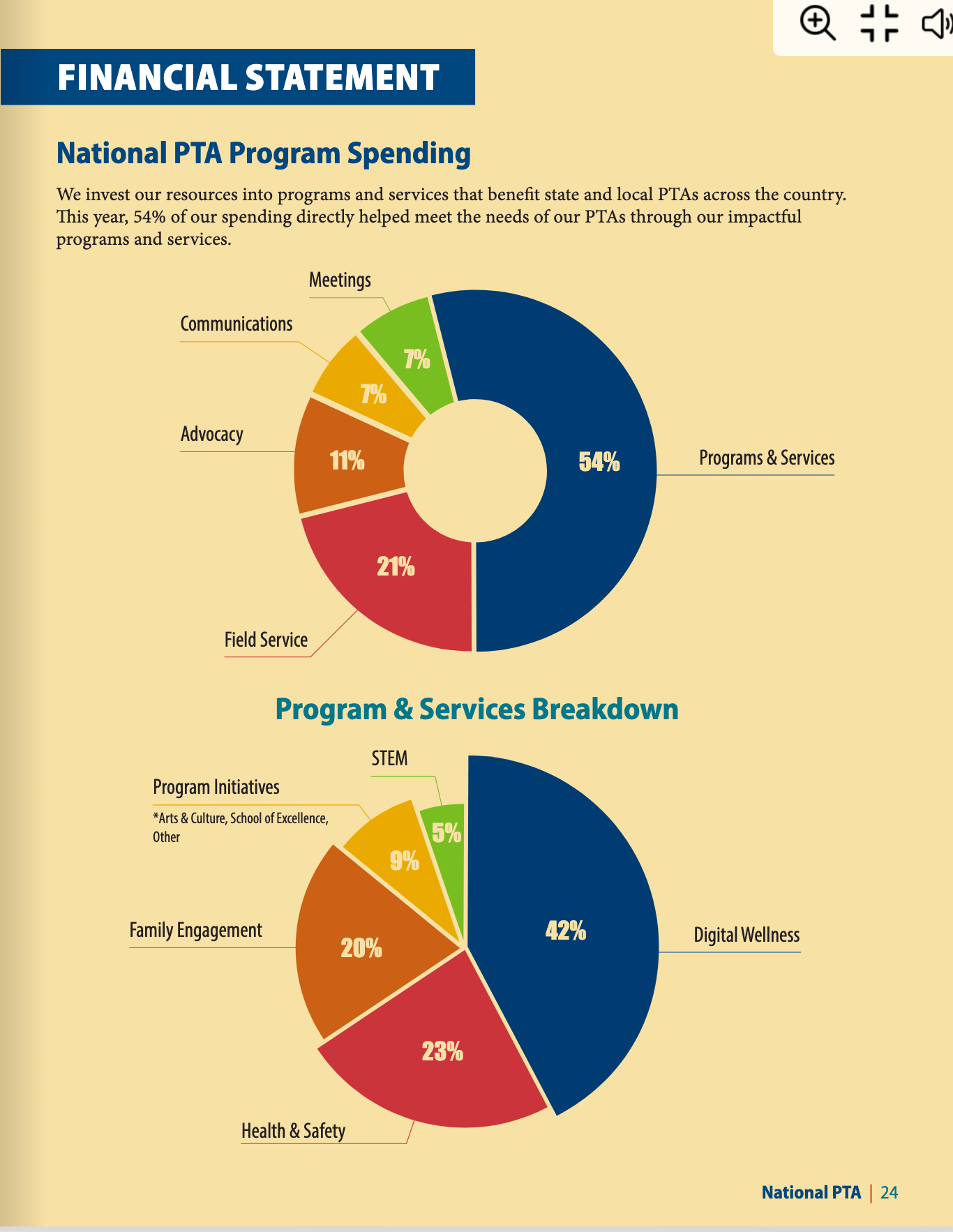
Yet in their 2024 annual report, the National PTA reports that 42% of their program and services costs goes to “digital wellness programs”– by far their largest expenditure. The National PTA spends almost ten times as much on “digital wellness” as they do on STEM programs and twice as much as they do on “family engagement.”
Sadly, a new partner has entered the chat: Big Tech.
Uncomfortable Truth #1: The National PTA calls TikTok and others “Proud Sponsors”
Listed on the National PTA website is a section called “Proud Sponsors.” (Notably it’s a little hard to find– none of these companies are listed on their landing page, so unless you dig, you wouldn’t know.)
Some of these “Proud Sponsors” include Google, Discord, Meta, TikTok, YouTube, and more.
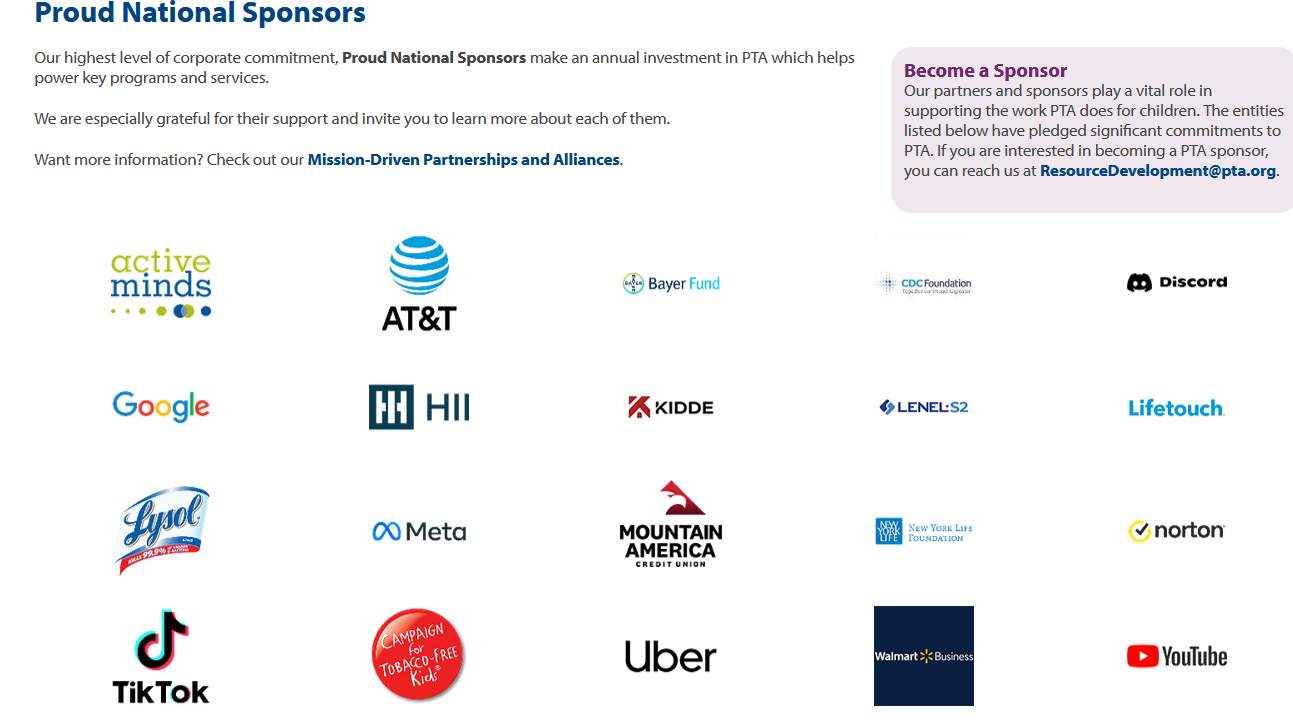
In January of 2026, many of these “proud sponsors” will be called into court to defend themselves against allegations that they intentionally target their products to children, harming them in the process. The discovery material for these lawsuits further reveals how the National PTA has been participating directly with Big Tech in predatory behavior targeting children.
Uncomfortable Truth #2: The National PTA partnered with Meta to ensure Instagram would be part of the “Back-to-School” experience
In 2014, Meta (Facebook’s parent company, which also controls Instagram) began a partnership with the National PTA to ensure Instagram was a part of their “Back-to-School campaign. According to emails located within discovery materials for upcoming litigation, “Meta chose [the National PTA] precisely because they were [viewed as a] “trusted, respected organization[s]” with “significant credibility” that could “be a public validator” for the company and “get [Meta’s] materials into the hands of parents, grandparents, and educators at scale.”
Meta seized on the public’s trust of the PTA name as an opportunity to promote their health-harming products to a network of over 16 million families. The PTA was paid $110K for this partnership. In 2014, Facebook’s revenue for the full year was $12.47 billion. The PTA got peanuts to compromise their reputation.
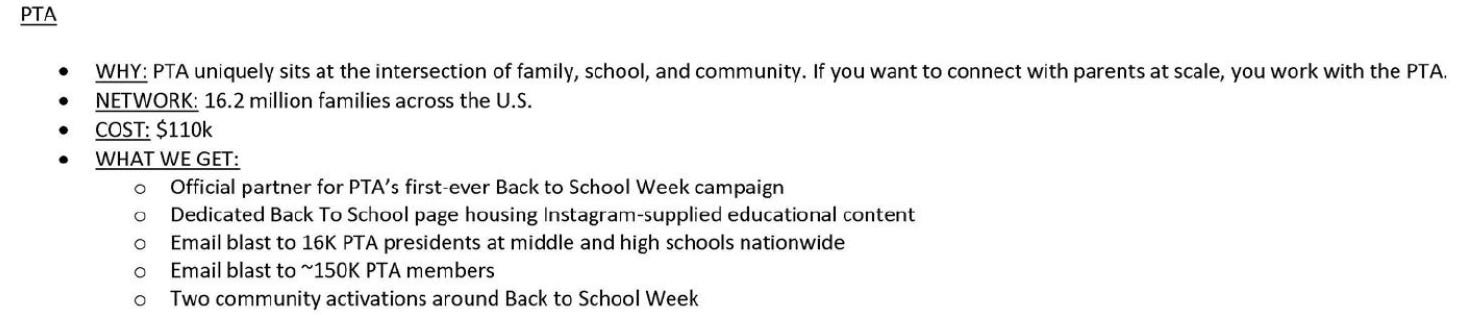
Unfortunately, the National PTA has continued their cozy relationship with Meta. In 2024, they partnered to offer Screen Smart Workshops to “empower parents and caregivers and give them easy access to practical resources, insights and guidance so they can confidently approach conversations within their families about age-appropriate online habits.”
We are not the first to cover this deeply disappointing partnership between Meta and National PTA. For more in-depth coverage, The Tech Transparency Project wrote a comprehensive overview here.
Uncomfortable Truth #3: The National PTA partners with TikTok, but claims they “don’t endorse them”
In 2019, TikTok jumped on the National PTA bandwagon and partnered with them to further spread the gospel of social media through a resource called “TikTok Guide for Parents: A Collaboration Between TikTok and the National PTA.” Yet again, the National PTA allowed themselves to be used as a front for the tech industry to peddle products to children by creating a false sense of safety for parents.
In the same discovery documents for the upcoming court hearing, emails between TikTok and the National PTA reveal that in exchange for funding from TikTok, the National PTA granted TikTok control over how the National PTA could speak about their product, stating the “PTA will not participate in any media interviews related to TikTok without first having a planning session with our spokesperson and your media folks.”

In the same email thread, the PTA describes the need to craft a “non-endorsing statement” to give to reporters when asked about their partnership with TikTok (which seems to indicate that the National PTA knew that questions would indeed be asked about this partnership). In the statement, the president of the National PTA, Leslie Boggs, acknowledges that there are “safety concerns” around children’s use of technology and states that the National PTA’s “collaboration with TikTok is an important way to raise the needs and concerns of families to the company to ensure these issues are top of mind and ensure the safety of young users on the app.”
However, the statement concludes, bizarrely, with this: “The National PTA does not endorse any commercial entire, product or service, and our association will always be an advocate for enhanced safety and privacy features in the digital world, while supporting families as they leverage all the safeguards available on the platforms they choose to participate on.”
A screenshot of the last page of the “TikTok Guide for Parents: A Collaboration Between TikTok and the National PTA” highlights the uncomfortable tension of this partnership. Despite displaying the National PTA logo next to TikTok’s, the fine print underneath reads “No endorsement of TikTok is implied.”
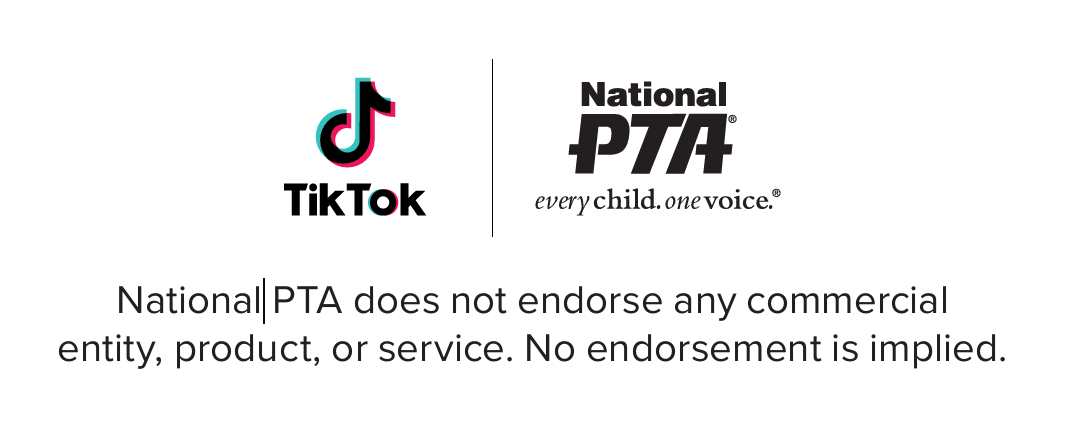
It’s difficult for us to see the National PTA “not endorsing” TikTok as a company, but comfortably accepting money and partnership from them as a “resource” to help families. This screenshot literally implies endorsement.
It’s either one or the other– you either endorse them and partner with them, or you do not endorse them and therefore condone their harmful products.
It cannot be both.
Uncomfortable Truth #4: The National PTA gets paid by YouTube to promote YouTube as “educational content” in schools
For most parents in 2026, it’s the norm for children to have access to YouTube on their school-issued device whether parents want it or not (and it’s the default– a few parents have had success getting it blocked or removed, but only because they asked, and even that is no guarantee that children won’t just find the workarounds, as many do). One pending lawsuit alleges that a child watched over 13,000 YouTube videos in 3 months on his school-issued computer.
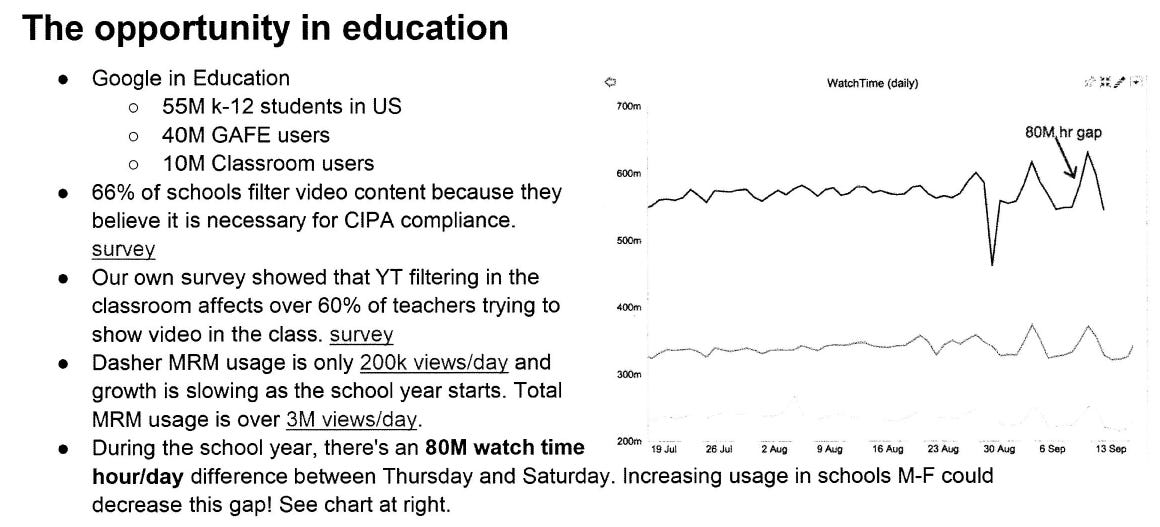
The onslaught of EdTech products into schools is many years in the making, but over a decade ago, Google realized that YouTube viewership was dropping during the day because kids were in school. In order to increase viewers, Google and YouTube executives realized they would have to find a way to get schools on board with promoting their product.
The lawsuit claims that YouTube wanted to close what it perceived to be an 80 million hour difference in watch time during weekend hours. Internal YouTube documents from 2016 include this chart, highlighting the gap in use and the conclusion that “increasing usage in school M-F could decrease this gap!”:
So naturally they turned to the National PTA.
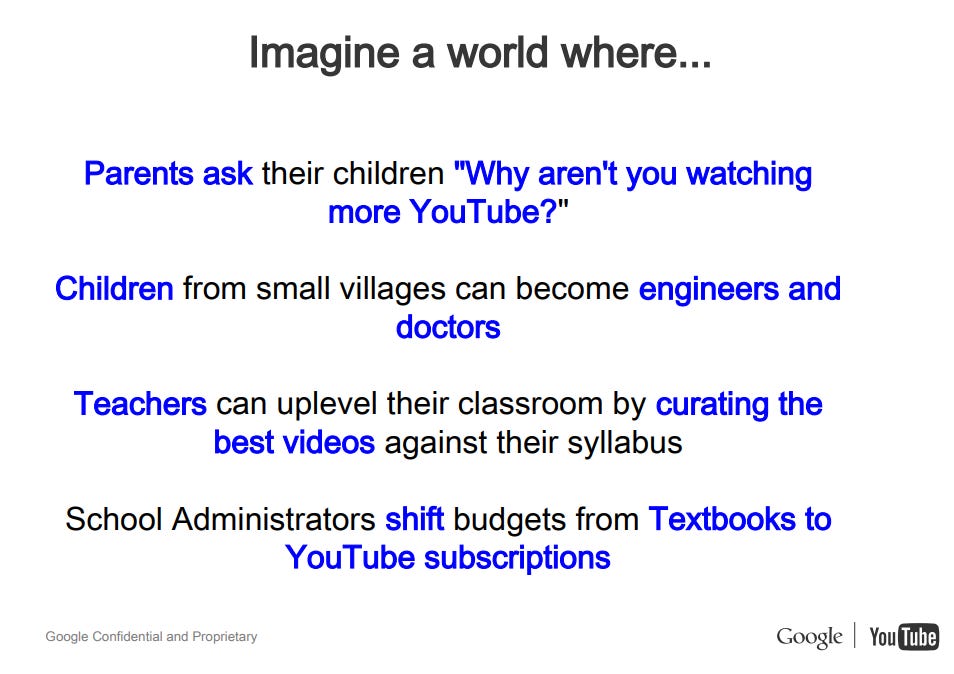
Internal Google documents show a slide that posits this question: Imagine a world where parents ask their children “Why aren’t you watching more YouTube?”
You know, the kinds of questions families usually ask around the dinner table. Ha.
Beyond their growing role as a pawn for social media companies to provide parents a false sense of security that their products are safe, now the National PTA is partnering with companies like YouTube to promote their product as educational to increase engagement, in spite of, in the words of YouTube’s own global head of youth and learning, admitting in a March 2025 deposition YouTube had not measured the effectiveness of YouTube in improving student outcomes. In other words, they can’t even prove that they’ve worked to show that YouTube can serve an educational benefit to children.
As the National PTA took funds from YouTube, the lawsuit claims it “used those partnerships to distribute information to schools and normalize itself as part of the classroom experience.”
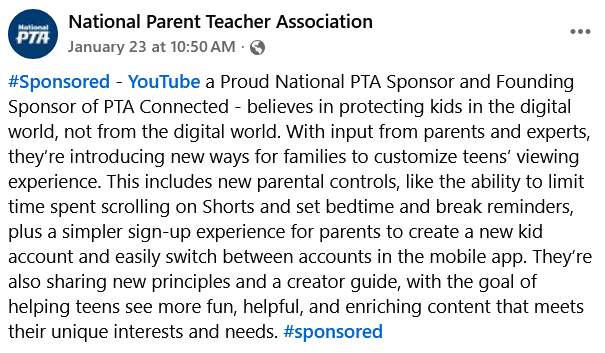
Despite growing concerns and independent research about the harms of excessive screen time on children and the addictive nature of YouTube’s platform, the National PTA continues to boast that YouTube is a proud sponsor to this day. Just this January, this post appeared on their LinkedIn page:
Uncomfortable Truth #5: The National PTA contemplated a partnership with Snap to “build trust”
It’s becoming increasingly clear that social media platforms are not safe for children and tech companies will not implement features or safeguards to meaningfully protect young users because it would undermine profits. While many of these platforms are egregious in the harm they cause, Snap, parent company of Snapchat, is perhaps the worst offender.
But yet again, in spite of the problems with Snap, in 2024, leadership at the National PTA was in conversation with Snap to help build trust for their product. (As the National PTA’s “corporate partnership” contact admitted, “it’s just bananas to me that we aren’t collaborating with Snap on engaging and educating parents, all things considered.” According to notes taken by Snap’s policy person, it appears the National PTA’s goal in working with Snap was to “create opportunities for kids to share what they love about Snapchat with their parents” and “get parents on Snapchat to understand, use, and play with features.”
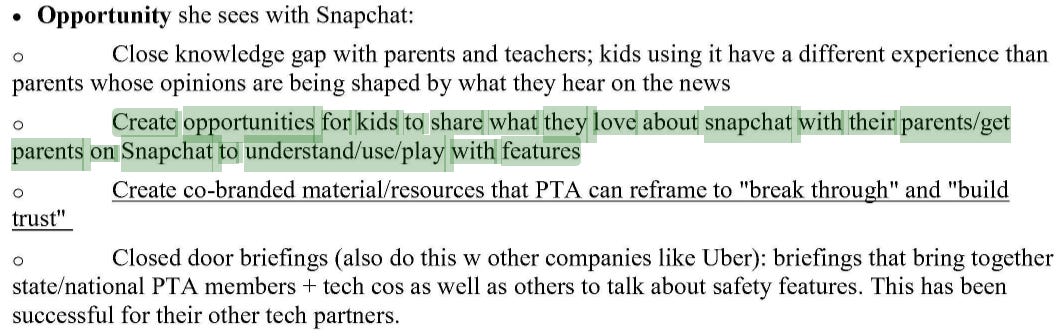
This partnership never took off because Snap ultimately thought there was not enough return on investment– “the cost was high and the juice wasn’t really worth the squeeze,” as Snap’s policy communications person stated. In other words, Snap wouldn’t make as much money as they’d like, so they passed.
You know, protecting kids and stuff.
The tech industry has deep pockets and is following the Big Tobacco playbook to use partnerships with historically trusted organizations to hide the harms their products cause and influence public opinion.
What Can Parents Do?
Our goal in this series is to make obvious the complicity of seemingly trusted organizations in promoting health-harming products to children through partnerships with the technology companies who build, market, and sell these products, just like Big Tobacco did.
But we also realize that it’s one thing to know about these conflicts– it’s another to act on this information.
Our recommendation to any parent, teacher, advocate, school leader, or concerned citizen is to simply start by asking questions: Does our school partner with CoSN? Does our PTA take funding from the National PTA? When your school says they will partner with a company claiming they do “digital safety,” check out websites and look for funding conflicts. Everything we are writing about is public information that we have found on websites— you can do this too.
Knowledge is power.
 | A guest post by
|
Thank you so much for exposing these dirty truths. It's so disturbing to see how supposed child advocates will break ethics and compromise our kids' health and learning by rushing to feed at the trough of Silicon Valley profits.
Thank you both for your unceasing diligence in bringing this information out of the shadows and into the sunlight. I am wearing my newly acquired First Fish shirt proudly as I read this. We parents and educators are beyond grateful for all the work you are doing.